
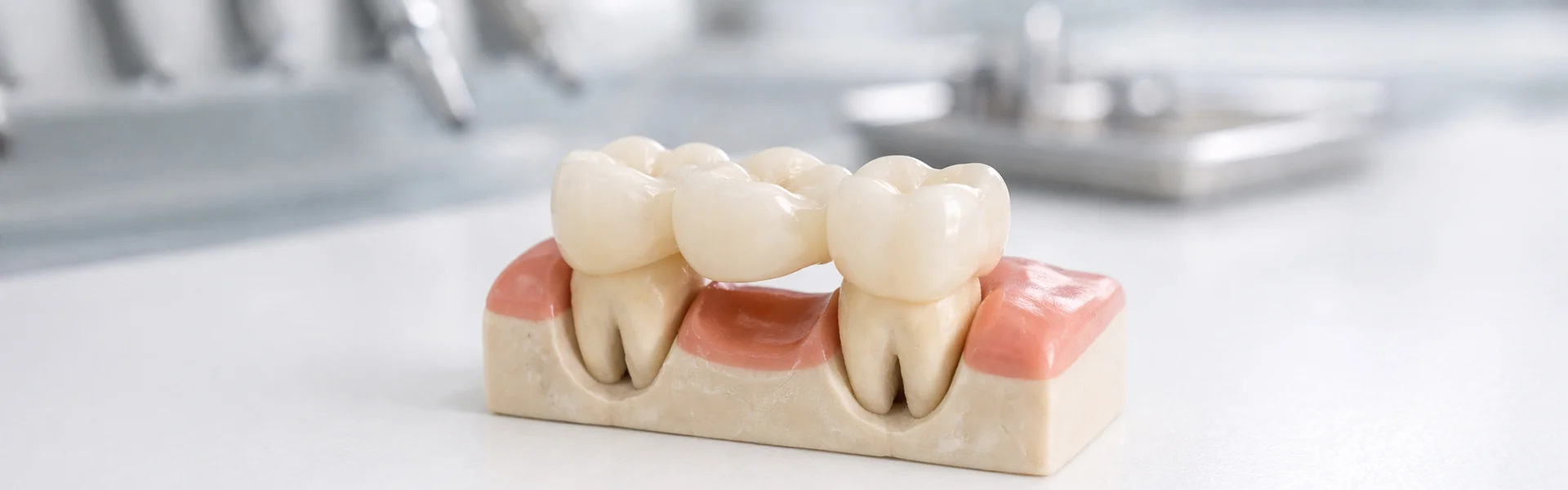
Front Teeth Dental Bridge: Types, Cost, and What to Expect
Losing a front tooth can change the way you speak, bite, and feel about the open space in your smile. When replacing a missing front tooth, the dentist must consider appearance, gum health, bite forces, and the condition of nearby teeth. A front-teeth dental bridge is a fixed option for restoring that space without relying on a removable appliance.
Front teeth also need careful planning because small differences in tooth width, shade, or gum position are easy to notice. The replacement should fit comfortably into the bite and contact neighboring teeth to allow normal function. These details help the dentist choose the right bridge design before treatment begins.
What Is a Front Teeth Dental Bridge?
A bridge replaces a missing tooth with an artificial tooth called a pontic. Depending on the design, the pontic is supported by crowns, bonded retainers, or dental implants. When dentists plan dental bridges, front teeth need extra attention because shade, tooth proportions, gum contours, and bite contacts are more visible in this part of the mouth.
The supporting structures also matter. A tooth-supported bridge depends on healthy abutment teeth, while an implant-supported restoration relies on implants placed in the jawbone. Evaluating these differences helps the dentist choose a design that fits both the missing space and the surrounding tissues.
Types of Dental Bridges for Front Teeth
No single bridge design works for every front-tooth space. The condition of neighboring teeth, available enamel or bone, bite direction, and number of missing teeth all influence the choice. The main designs are traditional, cantilever, Maryland, and implant-supported bridges.
Traditional Dental Bridge
To place a traditional bridge, the dentist reshapes the teeth beside the gap so crowns can support the artificial tooth. This design can be practical when those teeth already need crowns or extensive restorative care.
Cantilever Bridge
A cantilever bridge is anchored on only one side of the space, which means the strength of that supporting tooth and the direction of bite forces require careful evaluation. It can work in selected cases, but the one-sided support makes case selection particularly important.
Maryland (Resin-Bonded) Bridge
A Maryland bridge uses thin retainers bonded to the backs of adjacent teeth and is commonly used for front teeth because it usually preserves more natural tooth structure than full crowns. Adequate enamel and a favorable bite are important because excessive forces can loosen the bonded retainers.
Implant-Supported Bridge
Dental implants, rather than natural teeth, support an implant-supported bridge and are generally more relevant when several teeth are missing in a row. Implant treatment requires enough bone for placement, healthy surrounding tissues, surgery, and a healing period before the final restoration is completed.
Who’s a Good Candidate for a Front Tooth Bridge?
A bridge should be planned around the health of the mouth rather than the appearance of the gap alone. The dentist evaluates the proposed supporting teeth, gums, bite, oral hygiene, and, for implant-supported treatment, available bone. Problems such as untreated decay or active gum disease should be managed before placing a definitive restoration.
Important factors include:
- Healthy gum tissue
- Strong abutment teeth for a tooth-supported bridge
- Enough enamel for reliable resin bonding
- Adequate bone if implants are planned
- A bite that does not overload the restoration
- Good daily plaque control
- Access for cleaning beneath the pontic
- Realistic expectations about maintenance and replacement
The condition of the teeth next to the gap can strongly influence the plan. If those teeth are healthy and untouched, preserving their structure may favor a more conservative bonded bridge or, in some cases, an implant. Teeth that already need crowns can make a conventional bridge a reasonable option.
Dental Bridge vs. Implant vs. Veneer for Front Teeth
Bridges, implants, and veneers do not solve the same problem. Bridges and implants can replace missing teeth, while a veneer covers an existing tooth. Understanding what each restoration does helps prevent using a cosmetic procedure when you need actual tooth replacement.
Bridge vs. Implant
When comparing a dental bridge vs. an implant for front teeth, one major difference is what happens to the teeth beside the gap. A traditional bridge usually requires those teeth to be prepared for crowns, whereas an implant replaces the missing root without preparing healthy neighboring teeth solely for bridge support.
Implants require surgery, adequate bone, and time for healing before the final restoration is completed. A conventional bridge can often be completed without implant surgery and may make sense when nearby teeth already require crowns. Medical history, bone condition, bite, treatment time, and maintenance all influence the final recommendation.
Bridge vs. Veneer
A veneer changes the visible surface of a tooth that is still present, so it cannot fill the space left by a completely missing tooth. Veneers are generally used to modify shape, contour, or color rather than replace an absent tooth.
A bridge physically places a pontic in the missing-tooth space. This distinction matters when patients compare cosmetic and restorative options for the front of the mouth.
What to Expect: The Front Tooth Bridge Procedure
The exact sequence depends on the bridge design. A conventional bridge generally involves an examination, tooth preparation, an impression or digital scan, temporary protection, and final placement. Implant-supported treatment follows a different timeline because surgery and healing are part of the process.
Initial Exam and Treatment Planning
The first visit assesses the missing space, gums, supporting teeth, bite, and bone. Dental imaging can help evaluate roots, bone levels, or potential implant sites when those findings affect the treatment plan.
Preparing the Supporting Teeth
For a traditional bridge, the abutment teeth are reduced so supporting crowns can fit securely. Maryland bridges generally require less tooth alteration because the retainers bond mainly to the back surfaces of neighboring teeth.
Impressions and Your Temporary Bridge
An impression or digital scan records the positions and contours of the teeth. A temporary restoration may protect prepared teeth and maintain appearance while the final bridge is being made.
Final Placement and Adjustment
Before attachment, the bridge is evaluated for fit, shade, contact with adjacent teeth, gum relationship, and bite. Minor adjustments can help prevent one area from taking too much pressure during biting.
What Recovery Feels Like Afterward
Some sensitivity can follow tooth preparation and bridge placement. Mild changes often settle as the teeth and gums adjust, but a dentist should assess persistent pain, swelling, looseness, or an uneven bite.
How Much Does a Front Tooth Bridge Cost?
A common question is, how much does a front tooth bridge cost? There is no universal fee because the total changes with bridge design, materials, number of units, laboratory work, condition of supporting teeth, and whether additional dental care is needed first.
For example, decay or an old restoration in an abutment tooth may need attention before the bridge can be completed. Implant-supported treatment can involve additional stages such as imaging, implant placement, healing, and restorative components. These differences make a personalized estimate more useful than a single online price.
Insurance coverage and out-of-pocket costs also vary between plans. A written treatment estimate can help you understand what is included and whether alternative designs have different financial or maintenance considerations.
How Long Do Front Teeth Bridges Last, and How to Care for Them
A fixed bridge does not necessarily last for life. Cleveland Clinic reports an average lifespan of about five to 15 years, although individual longevity varies with oral hygiene, bite forces, abutment health, and the restoration’s condition. Regular examinations help identify changes before they compromise the bridge.
Typical Lifespan of a Front Tooth Bridge
Decay around an abutment tooth, unhealthy gums, excessive force, or damage to the restoration can shorten a bridge’s useful life. Grinding or clenching may also add stress to the restoration and supporting structures.
Long-Term Care and Maintenance Tips
Plaque can collect around supporting teeth and underneath the pontic, so daily cleaning around the bridge is essential.
- Brush twice daily with fluoride toothpaste.
- Clean beneath the bridge every day.
- Use floss threaders or another cleaning method recommended by your dental team.
- Avoid chewing ice and hard non-food objects.
- Keep regular dental examinations and professional cleanings.
- Report looseness, discomfort, or changes in your bite.
- Ask your dentist about protection if you grind or clench your teeth.
Good hygiene is particularly important around the abutment teeth because decay or gum inflammation can affect the foundation of the entire restoration. Cleaning underneath the pontic also helps keep the gum tissue healthy.
Potential Downsides of a Front Tooth Bridge
Traditional bridges require removal of some natural tooth structure from the abutment teeth. Once those teeth have been prepared for crowns, that change cannot simply be reversed. This is an important consideration when the adjacent teeth are otherwise healthy.
A bridge can also chip, loosen, wear, or eventually require replacement. Problems affecting one supporting tooth can compromise the larger restoration, and cleaning under the pontic requires more effort than cleaning around an individual natural tooth.
Appearance can also change over time. Gum levels, neighboring teeth, or the restoration itself may change in ways that make an older front bridge more noticeable even if it remains functional.
Frequently Asked Questions
Yes. Dental bridges for front teeth can replace missing teeth when the available support, gum health, and bite allow a stable restoration. The specific bridge design depends on the condition of the surrounding teeth and tissues.
They can function for many years, but lifespan depends on supporting teeth or implants, oral hygiene, bite forces, and ongoing dental care. Ongoing dental monitoring helps catch small concerns before they lead to broader bridge problems.
There is no universal best design. For front teeth, a Maryland bridge may be appropriate, while traditional, cantilever, or implant-supported options depend on factors such as tooth strength, bite pressure, bone support, and the number of missing teeth.
Planning a Front Tooth Replacement
Replacing a visible tooth requires more than simply filling a space. The plan should account for healthy tooth preservation, gum condition, bite forces, cleaning access, and the long-term demands placed on the restoration.
The condition of nearby teeth also helps determine whether a conventional bridge, resin-bonded design, or implant-supported option deserves consideration. Reviewing the strengths and limitations of each approach can clarify treatment decisions because no single option suits every patient.
Smile City Dental provides dental bridge care in St. Cloud and can evaluate the missing-tooth space and surrounding structures before discussing which approach fits the clinical findings.